Egypt - US-Iran Conflict
Egyptian Foreign Minister Badr Abdelatty said Egypt and its Middle Eastern neighbors are paying a heavy economic price as a result of the war between the United States and Iran, calling for de-escalation and renewed diplomatic efforts to end the conflict.
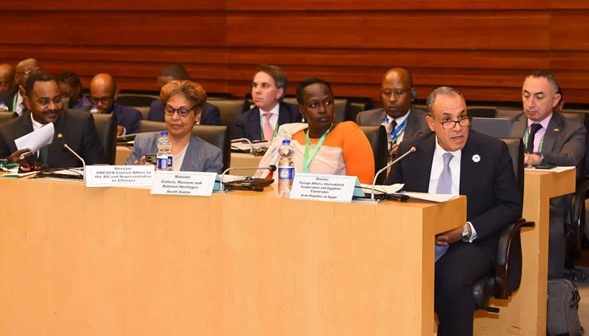
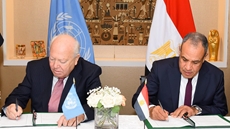
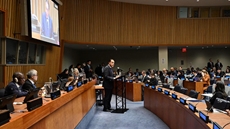
Egyptian Foreign Minister Badr Abdelatty speaks during a session on the sidelines of the UN General Assembly in New York.
Key Highlights
Economic impact: Egypt and regional neighbors are bearing heavy costs from the conflict
Egypt’s position: Call for de-escalation and renewed diplomatic efforts
Diplomatic efforts: Cairo is helping facilitate negotiations between Washington and Tehran
Regional role: Egypt is working with Qatar, Pakistan and Oman
Political solution: Egypt favors negotiations over military action
Regional security: Cairo calls for an inclusive framework for the Middle East
Palestinian state: Abdelatty says it must be part of any comprehensive regional agreement
Egypt’s Diplomatic Efforts
In an interview with The Washington Times published Friday, Abdelatty said Egypt remained actively engaged in efforts to facilitate negotiations between Washington and Tehran. The two sides held indirect talks in New York this week on the sidelines of the UN General Assembly meetings.
Abdelatty described Egypt as a key pillar of regional stability and said Cairo, alongside other regional countries including Qatar, Pakistan and Oman, was working to help achieve a lasting peace.
Diplomacy Over Conflict
Abdelatty said Egypt believes the conflict should end at the negotiating table rather than on the battlefield, arguing that military solutions cannot deliver lasting stability.
He stressed that the priority was to prevent a renewed outbreak of military operations between the United States and Iran, citing the economic pressures and broader challenges created by the escalation.
Abdelatty also pointed to a memorandum of understanding signed in Islamabad in June as a possible starting point for renewed efforts, despite differing interpretations of its provisions in Washington and Tehran.
He said the agreement represented an opportunity to build on previous diplomatic efforts and called for continued engagement to advance a political solution.
The Egyptian foreign minister also called for a broader regional security framework for the Middle East that would remain open to all countries.
He stressed, however, that any comprehensive regional agreement must address the establishment of a Palestinian state.
Abdelatty said lasting peace and stability in the region could not be achieved without resolving the Palestinian issue, including for Israel itself.
 Fri, Sep. 25, 2026