CAIRO – 27 January 2026: During a meeting in Amman on Tuesday, Egypt and Jordan reaffirmed their commitment to supporting the implementation of the Board of Peace’s mandate as a transitional body, in line with the comprehensive plan to end the conflict in Gaza adopted under UN Security Council Resolution 2803, According to Ahram Online.
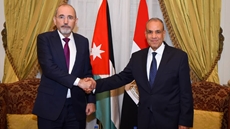
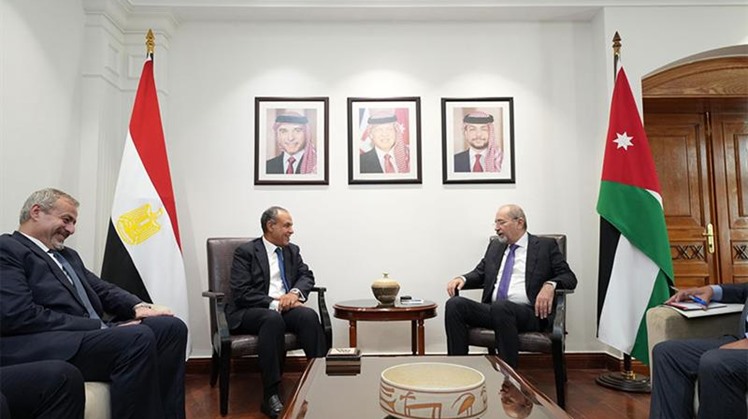
The meeting brought together Foreign Minister Badr Abdelatty and Jordan’s Deputy Prime Minister and Minister of Foreign Affairs Ayman Safadi as part of Abdelatty’s official visit to the Jordanian capital, according to a foreign ministry statement.
Both ministers said their support for the Board of Peace is consistent with the agreed framework to end the Israeli war on Gaza, welcoming the launch of the Board and the beginning of the second phase of the comprehensive peace plan.
They stressed the importance of ensuring that the Board fulfils its transitional role as outlined in the plan endorsed by the United Nations (UN).
Abdelatty and Safadi also discussed the situation in Gaza, underscoring the need to fully implement the ceasefire agreement, ensure the immediate, sufficient, and sustained entry of humanitarian aid without obstacles, and pave the way for the Palestinian Authority (PA) to resume its responsibilities in the Strip.
They emphasised the importance of preserving the unity of Palestinian territory between the occupied West Bank and Gaza.
The ministers reiterated their support for a clear political horizon leading to an independent and sovereign Palestinian state along the 4 June 1967 lines, with East Jerusalem as its capital, in accordance with the two-state solution and relevant international resolutions.
They further warned of the dangers posed by what they described as illegal Israeli measures in the occupied West Bank, cautioning that such actions risk fuelling escalation, undermining de-escalation efforts, and eroding prospects for a just and lasting peace.
On bilateral ties, the two sides affirmed the depth of the longstanding and close relations between Egypt and Jordan, voicing their shared commitment to strengthening cooperation across various sectors—particularly in economic and investment fields—and to building on existing coordination mechanisms to serve the interests of both countries and their peoples.
The talks also covered a range of regional and Arab issues, with both ministers stressing the importance of continued coordination to help bolster security and stability in the region.
The Board of Peace is an international transitional body established under a comprehensive, UN-backed framework aimed at ending the war in Gaza and managing the post-conflict phase until a permanent political settlement is reached.
The Board was announced as part of a US-led peace plan and formally endorsed by UNSC Resolution 2803, which defines it as a temporary mechanism tasked with overseeing the transition from active conflict to restored Palestinian civilian governance in the Gaza Strip.
Under the plan, the Board of Peace is mandated to support the implementation of the ceasefire, coordinate humanitarian access and early recovery efforts, and facilitate stabilization arrangements in cooperation with regional and international partners.
It is also tasked with helping prepare the conditions for the PA to resume its responsibilities in Gaza.
The Board is not intended to function as a permanent governing authority. Instead, it is explicitly framed as a time-bound transitional body designed to prevent a governance vacuum and ensure continuity of administration, aid delivery, and reconstruction during the interim period.
Regional players, including Egypt and Jordan, have expressed support for the Board, viewing it as a structured mechanism to stabilize Gaza after the war, avert further escalation, and preserve prospects for a negotiated settlement.
Arab states have repeatedly stressed that the Board’s effectiveness hinges on full respect for its transitional mandate, unhindered humanitarian access, and sustained international engagement to support a comprehensive political solution.
 Tue, Jan. 27, 2026