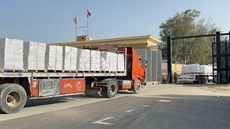
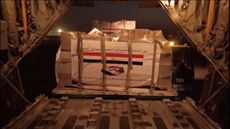
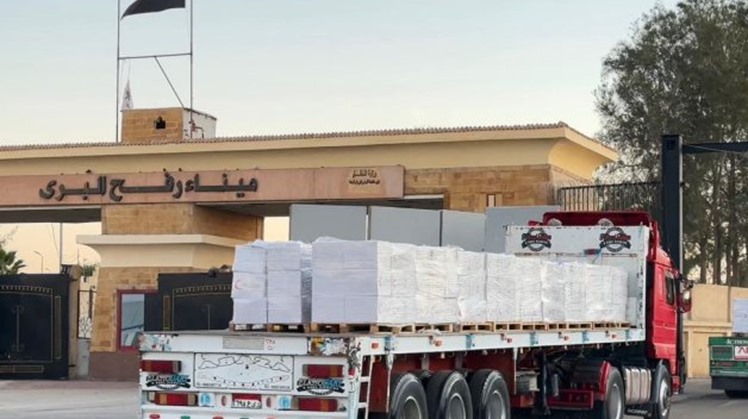
CAIRO – 3 February 2026: The 130th “Zad Al-Ezza from Egypt to Gaza” humanitarian aid convoy entered the Gaza Strip on Tuesday via the subsidiary gate of the Rafah land port in Egypt’s North Sinai Governorate, before heading to the Kerem Abo Salem crossing to prepare for distribution to Palestinian communities inside the enclave.
An official source at the Rafah land port said the convoy includes hundreds of trucks transporting thousands of tons of humanitarian and relief supplies. These shipments contain food baskets and fresh vegetables, medical supplies and essential medicines, personal care products, and petroleum items such as gasoline, natural gas, and diesel fuel, in addition to shelter materials including tents, blankets, and winter clothing for displaced and conflict-affected families.
The Egyptian Red Crescent continues to serve as the national coordination mechanism for organizing and dispatching aid into Gaza since the start of the crisis in October 2023. The Rafah crossing has remained operational throughout this period, with the organization maintaining a high level of readiness across its logistics centers and deploying more than 65,000 volunteers to facilitate the flow of humanitarian assistance.
Israeli forces closed the crossings linking Gaza on March 2, 2025, following the end of the first phase of a ceasefire agreement and the failure to reach a deal to extend the truce. The ceasefire was subsequently breached on March 18, 2025, with renewed airstrikes and ground operations in several areas of the Gaza Strip.
During that period, the entry of humanitarian aid, fuel, and shelter supplies for displaced families was restricted, and heavy equipment required for debris removal and reconstruction was barred from entering Gaza. Aid deliveries resumed in May 2025 under a mechanism implemented by Israeli authorities and a US-based security company, a move that drew objections from the United Nations Relief and Works Agency for Palestine Refugees, which cited concerns over compliance with established international humanitarian frameworks.
On July 27, 2025, the Israeli military announced a temporary 10-hour humanitarian pause in specific areas of Gaza to allow the delivery of relief supplies.
Mediators, including Egypt, Qatar, and the United States, continued efforts to secure a comprehensive ceasefire and facilitate the exchange of detainees and captives. An agreement was reached in the early hours of October 9, 2025, between Hamas and Israel on the first phase of the ceasefire, based on a proposal announced in Sharm El-Sheikh through Egyptian, American, Qatari, and Turkish mediation.
The second phase of the agreement entered into force on Monday, February 2, 2026, following the completion of the exchange process and the handover of the remains of the last Israeli captive under the initial phase. This development allowed the resumption of movement through the Palestinian side of the Rafah crossing, enabling injured and wounded Palestinians to travel to Egyptian hospitals for medical treatment while facilitating the continued entry of humanitarian aid into the Gaza Strip.
The arrival of the 130th “Zad Al-Ezza” convoy underscores ongoing regional and international efforts to address the humanitarian crisis in Gaza and ensure the sustained delivery of essential supplies to vulnerable communities amid fragile ceasefire conditions.
 Tue, Feb. 3, 2026