Egypt - South Korea Investment
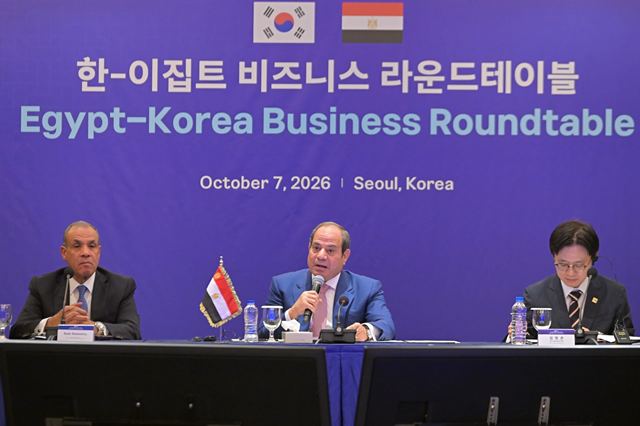
Egyptian President Abdel Fattah El-Sisi met with executives from 23 leading South Korean companies and representatives of the country’s business community in Seoul on Wednesday, as part of his state visit to the Republic of Korea.
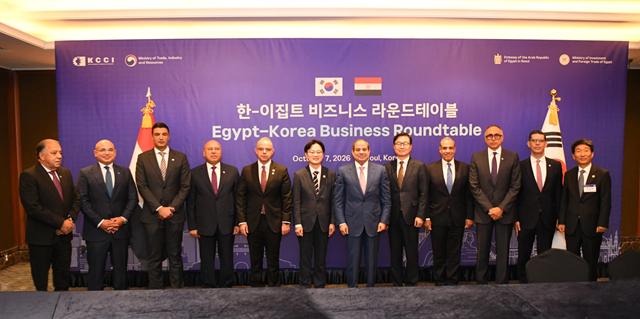
President Abdel Fattah El-Sisi meets executives from leading South Korean companies and members of the business community during a roundtable in Seoul.
Key Highlights
Business roundtable: El-Sisi meets executives from 23 leading South Korean companies
Investment reforms: Cairo highlights regulatory reforms, investor incentives and private-sector expansion
Industrial zone: Egypt renews proposal for an integrated Korean manufacturing hub in the SCZONE
Manufacturing: Shipbuilding, automotive, electronics, petrochemicals and pharmaceuticals among priority sectors
Technology: AI, digital transformation and data centers identified as areas for deeper cooperation
Clean energy: Solar, wind, green hydrogen, smart grids and energy storage highlighted for investment
Seoul Business Roundtable
23 LEADING COMPANIES
South Korean businesses joined discussions on investment, manufacturing, technology and long-term partnerships with Egypt
A Broader Economic Partnership
During the roundtable, El-Sisi highlighted the longstanding economic and investment partnership between Egypt and South Korea and expressed Cairo’s ambition to expand cooperation into new sectors and more advanced forms of partnership.
Presidential spokesperson Mohamed El-Shennawy said El-Sisi praised Korean companies as trusted partners in Egypt’s development and stressed the government’s commitment to strengthening cooperation in investment, manufacturing and technology.
From Trade to Advanced Manufacturing
Egypt’s vision for cooperation with South Korea goes beyond traditional trade, focusing instead on local manufacturing, technology transfer, innovation and deeper industrial partnerships.
El-Sisi outlined economic and structural reforms implemented in recent years to improve Egypt’s investment climate and business environment.
• Exchange-rate liberalization
• Updated investment legislation and regulatory frameworks
• Expanded role for the private sector
• Streamlined one-stop-shop investment procedures
• Investment guarantees and profit repatriation protections
The president said the results of these measures were reflected in economic indicators and assessments by international institutions, helping strengthen confidence in Egypt’s economy and its ability to attract further investment.
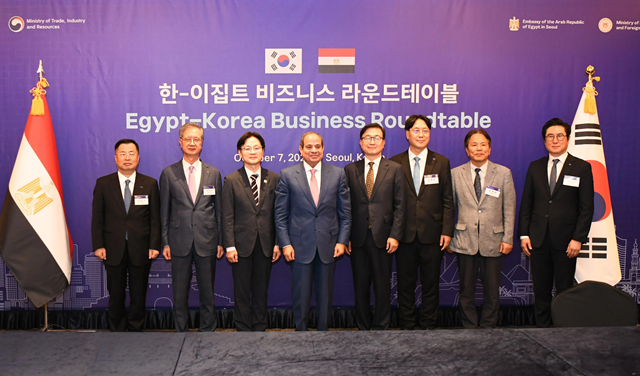
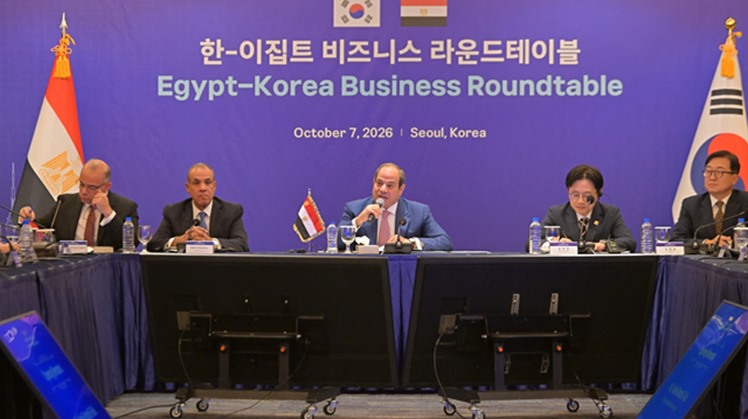
El-Sisi outlined Egypt’s investment reforms and incentives during discussions with South Korean business leaders in Seoul.
El-Sisi also highlighted competitively priced industrial land, modern infrastructure, worker-training programs and efforts to provide competitive financing for investment partnerships.
He also pointed to measures facilitating the entry of foreign experts and technical personnel required for investment projects.
A Korean Industrial Zone in the SCZONE
El-Sisi renewed Egypt’s invitation to establish an integrated Korean industrial zone within the Suez Canal Economic Zone, positioning it as a potential regional manufacturing and export hub for Korean companies.
Gateway to Regional Markets
The proposed Korean industrial zone could serve Egypt’s domestic market while giving manufacturers access to African, European and Arab markets through Egypt’s network of trade agreements.
The president stressed that Egypt’s vision for its partnership with South Korea goes beyond traditional trade, with a focus on localizing industries, transferring technology, building capacity and promoting innovation.
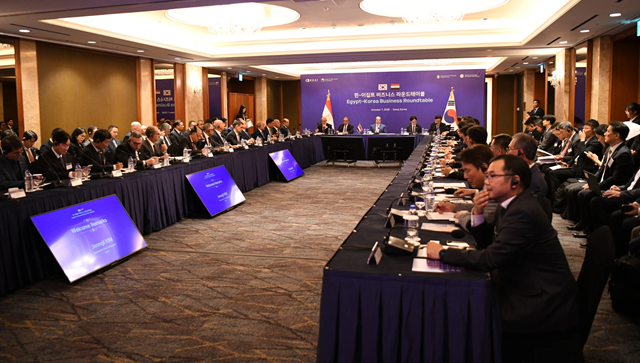
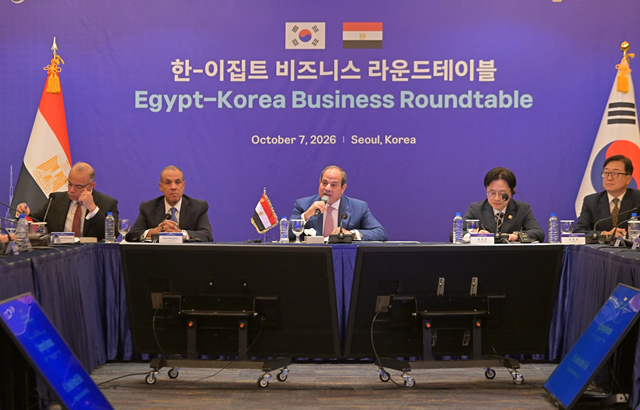
Egyptian and South Korean officials and business leaders during the investment roundtable in Seoul.
Priority Investment Sectors
Manufacturing: Shipbuilding, automotive, electronics, petrochemicals and pharmaceuticals
Technology: Artificial intelligence, digital transformation and data centers
Food & agriculture: Agriculture, food processing and aquaculture
Consumer industries: Textiles and related manufacturing
Tourism: New partnerships and investment opportunities
El-Sisi invited Korean companies to pursue joint manufacturing partnerships across these sectors, with an emphasis on local production and technology transfer.
Clean Energy and Regional Expansion
The president encouraged Korean companies to expand their investments in Egypt’s oil, gas and mining industries, as well as new, renewable and clean energy projects.
• Solar and wind power
• Green hydrogen
• Smart electricity grids
• Energy storage technologies
El-Sisi also pointed to opportunities for Egyptian and Korean companies to jointly undertake construction and infrastructure projects across Arab and African markets.
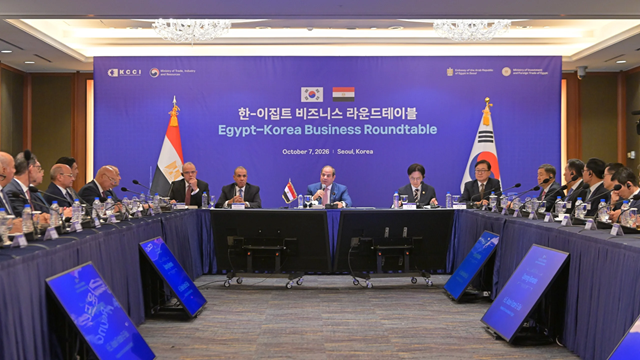
South Korean business leaders participate in discussions on investment and long-term economic cooperation with Egypt.
Turning Opportunities into Projects
El-Sisi called for a stronger role for the Egypt-Korea Business Council, regular joint economic forums and concrete action plans to turn investment opportunities into projects on the ground.
The roundtable included discussions with Korean business leaders on opportunities to establish long-term strategic partnerships with Egypt.
Participants welcomed Egypt’s efforts to facilitate trade and investment and improve the business environment, according to the presidency.
Egypt as a Regional Gateway
Korean business leaders highlighted Egypt’s strategic location and its potential to serve as a gateway to African and regional markets.
Participants also expressed interest in pursuing further investment opportunities in Egypt, while El-Sisi reaffirmed the government’s commitment to facilitating Korean investment and invited companies to visit Egypt to explore available opportunities and potential partnerships.
From the Seoul Roundtable
Scenes from President El-Sisi’s roundtable with South Korean companies and business representatives in Seoul.
 Wed, Oct. 7, 2026