Egypt - October Victory & National Security
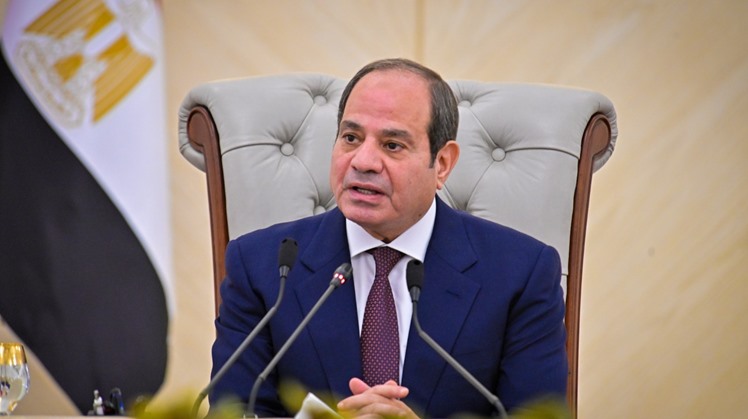
President Abdel Fattah El-Sisi chaired a meeting of the Supreme Council of the Armed Forces at the Strategic Command headquarters in the New Capital on Monday, as Egypt marked the 53rd anniversary of the October 1973 War victory.
Key Highlights
Combat readiness: El-Sisi calls for the highest levels of preparedness amid regional challenges
October legacy: President says the 1973 victory reflected preparation, determination and confidence
National security: Armed Forces reaffirm commitment to protecting Egypt’s borders, resources and stability
Palestinian state: Cairo maintains that a two-state solution is essential for lasting regional peace
Gulf security: Egypt considers the security of Arab Gulf states part of its own national security
Water security: El-Sisi reaffirms Egypt’s historical and legal rights to Nile water
October Victory
53RD ANNIVERSARY
Egypt marks more than five decades since the October 1973 War victory
1973
A victory El-Sisi described as a lasting symbol of preparation, resolve and national determination
El-Sisi, the Supreme Commander of the Armed Forces, was received by Commander-in-Chief of the Armed Forces and Minister of Defense and Military Production Ashraf Salem Zaher, Armed Forces Chief of Staff Ahmed Khalifa and a number of senior military commanders.
Presidential spokesperson Mohamed El-Shennawy said El-Sisi congratulated members of the Armed Forces on the anniversary and stressed the importance of maintaining the highest levels of combat readiness to defend the country, safeguard its national interests and protect its resources amid unprecedented regional challenges and changes.
• Review of Armed Forces missions and operational efforts
• Presentation of future recruitment policy
• Assessment of regional and international developments
• Evaluation of implications for Egypt’s national security
During the meeting, Zaher reviewed the Armed Forces’ efforts in carrying out their missions, while the head of the Armed Forces Operations Authority presented an overview of future recruitment policy.
The council also reviewed regional and international developments and their implications for Egypt’s national security, reaffirming the Armed Forces’ commitment to protecting the country’s borders, security and stability.
The Spirit of October
El-Sisi said the October victory showed that nations can overcome defeat through careful preparation, determination and confidence in their ability to succeed.
October Victory and Egypt’s Armed Forces
In a speech marking the anniversary, El-Sisi paid tribute to the Armed Forces, the soldiers who fought in the October War, Egypt’s fallen servicemen and wounded veterans.
He said the October 1973 victory demonstrated Egypt’s determination to reclaim its land and showed that nations could overcome defeat through preparation, resolve and confidence in their ability to succeed.
El-Sisi said the victory was the result of years of intensive work and careful preparation, adding that Egypt continues to draw on the spirit of October as it pursues development and builds what he described as the New Republic.
The president also acknowledged the economic pressures facing Egyptian families, saying the state had chosen to confront long-standing structural problems rather than rely on temporary solutions.
He stressed that building the country required sustained reform, hard work and a willingness to address accumulated challenges, while pledging to continue development efforts toward a stronger future.
Regional Crises and National Security
El-Sisi said Egypt was navigating a region facing severe crises and instability, alongside rapid global changes and unprecedented challenges.
He attributed Egypt’s resilience to the awareness of its people, the cohesion of its domestic front, the sacrifices of the Armed Forces and police, and the work of state institutions.
The president warned that challenges to Egypt’s stability remained, but stressed that the country’s institutions were strong and capable of protecting its national security, resources and stability.
Peace Through a Palestinian State
El-Sisi reiterated that an independent Palestinian state in accordance with international legitimacy remains the only guarantee for a just and lasting peace in the Middle East.
Palestinian State and Regional Peace
El-Sisi reiterated that the establishment of an independent Palestinian state in accordance with international legitimacy remained the only guarantee for a just and lasting peace and stability in the Middle East.
He pointed to the history of conflict between Egypt and Israel before their peace agreement, reached with U.S. mediation, as evidence that diplomacy could end prolonged conflicts and enable peaceful coexistence.
El-Sisi reiterated Egypt’s categorical rejection of any attempt to displace Palestinians from their land and called for the full implementation of U.S. President Donald Trump’s plan for a ceasefire in the Gaza Strip.
He also reaffirmed Egypt’s support for the unity, sovereignty and territorial integrity of Arab states and its rejection of any actions targeting their national institutions.
Gulf Security and Maritime Navigation
El-Sisi stressed that the security of Arab Gulf states was an integral part of Egypt’s national security and reiterated Cairo’s condemnation of attacks targeting Arab countries.
He also underlined the importance of preserving freedom of navigation through international waterways, amid continued regional tensions affecting maritime security and international trade.
Addressing Egypt’s water security, El-Sisi described the Nile as the country’s lifeline and the foundation of its existence for thousands of years.
Egypt’s Lifeline
El-Sisi stressed that Egypt’s share of Nile water is an established historical and legal right that cannot be diminished or compromised.
The president reaffirmed Egypt’s commitment to cooperation and shared development with other Nile Basin countries, while stressing that Cairo would not allow measures that threatened its water security and would continue defending its rights through all means provided under international law.
El-Sisi concluded by reaffirming that the Egyptian Armed Forces remained fully prepared to defend the country, its resources and national security under all circumstances.
He also expressed confidence in the Egyptian people’s ability to overcome current challenges and continue the country’s development toward a stronger and more prosperous future.
 Mon, Oct. 5, 2026