The Saqqara cemetery is one of the most important archaeological areas in Egypt, where there are tombs whose walls are covered with inscriptions of very beauty and magnificence, and there are also pyramids, temples and burials of the Serapeum, and its name was derived from the god of the cemetery "Sukar".
Saqqara cemetery is also the only cemetery in Egypt that includes tombs since the beginning of Egyptian history and also includes many monuments from the Greek and Roman eras. Saqqara was classified as a world heritage site by UNESCO in 1979.
The most important monuments of Saqqara can be referred to by dividing the area into sectors, namely: The Northern Sector: It includes a group of tombs, the most important of which are the tomb of "Kaber" (Sheikh al-Balad) and the cemetery of "Husse Ra", according to what the Ministry of Tourism and Antiquities said, and the catacombs in the ground that were Dedicated to burying the ibis after mummification, as well as terraces after the kings of the first and second dynasties.
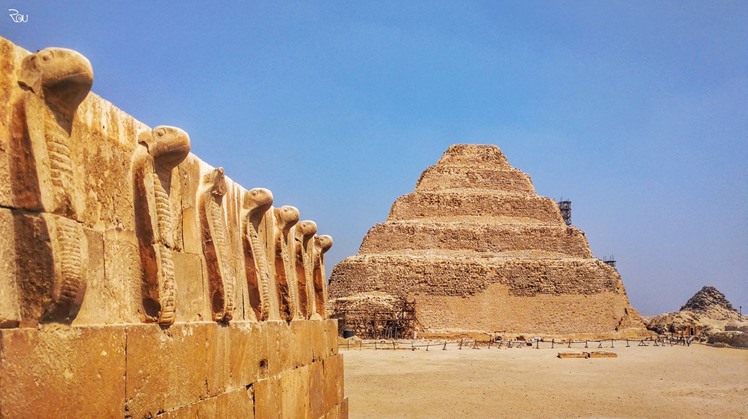
In front of the central sector: It is the most important sector in the cemetery, where the funeral group of King “Zosser” is located inside the great wall, in the center of which is the stepped pyramid, which is the first pyramid built of stone, built by the architect “Imhotep”, as well as the pyramid of King “Userkaf”, the first king of the navel Fifth.
And the Pyramid of Teti sector: It includes the pyramid of "Titi", the first king of the Sixth Dynasty and the pyramids of his two wives, and a group of state tombs, such as the cemetery of "Mari Roca."
And the Wanis pyramid sector: It includes the Wanis pyramid and its hierarchical group, and its importance is due to the presence of hieroglyphic writings on its walls that include religious incantations for the deceased known as “Maton Al-Ahram”, and the southern sector: it includes the pyramids of the kings of the Fifth and Sixth Dynasties, and pyramids for some queens, in addition to the “Shepseskaf” cemetery, which Known Mastaba Pharaoh.
 Wed, Dec. 1, 2021