The cash printing machines in the new Central Bank of Egypt press, in the Administrative Capital, issue the denominations of the Egyptian currency, which represents a civilizational shift as it is made of “polymer” material, known in the media as plastic money. her identity in the next report.
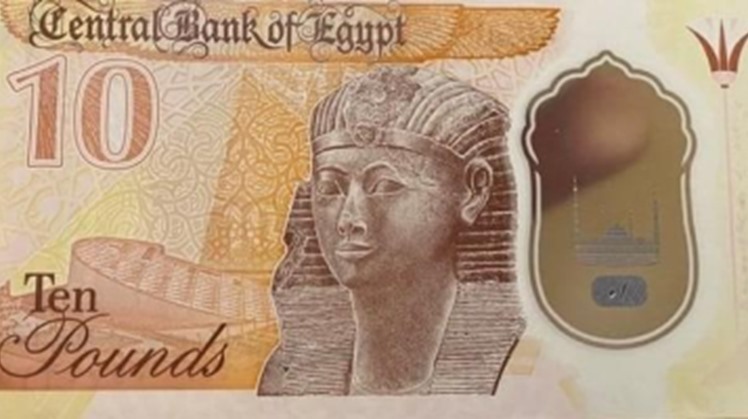
Archaeologist Sally Maher, a specialist in Egyptian antiquities at the Ministry of Tourism and Antiquities, said that the queen who came on the 10 pound coin was Queen Hatshepsut, who was wearing the same clothes as men without a beard.
And Queen Hatshepsut, the son of King Thutmose I and Queen Ahmose, and is one of the most famous figures in the history of ancient Egypt. Hatshepsut married her half-brother Thutmose II, who came to the throne after the death of their father, King Thutmose I, and Hatshepsut became the guardian of the throne of Egypt.
Traditions in ancient Egypt prevented women from becoming king of the country, but Hatshepsut confirmed that as the daughter of a king and another wife, she is of pure royal blood. She did not declare herself king despite being a woman, and Hatshepsut was the actual ruler of the country, and she ruled for several years on behalf of her husband's son, Thutmose III, who was young when he ascended the throne.
Hatshepsut was known to be the owner of a great achievement in construction projects, and also restored the trade movement towards Puntland in order to import ivory, resins, ebony, spices and other valuable goods. The mummy of Queen Hatshepsut was found in 1903 in the tomb (KV 60), in the Valley of the Kings in Luxor.
 Tue, Aug. 3, 2021