By: Mohamed Abdelaziem Elchime
CAIRO, 18 January 2026: The Egyptian parliamentary elections, which culminated in the final formation of the House of Representatives in early 2026, represent a pivotal milestone in Egypt’s political and legislative trajectory. Their significance stems not only from the complex socio-economic conditions in which they were held but also from their reflection of notable—albeit limited—shifts in the party landscape and the nature of political competition.
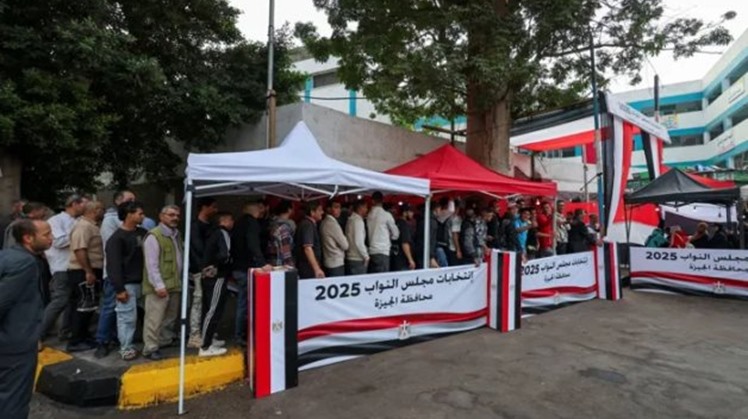
These elections were conducted over a relatively extended period, spanning from late 2025 to January 2026, due to multiple voting rounds, run-offs, and judicial appeals that reopened competition in several constituencies.
The elections were held to select 596 members of the House of Representatives. Of these, 568 were elected through a combination of the absolute closed-list system and the individual candidacy system, while 28 members were appointed by the President, in accordance with the constitutional framework governing parliamentary work in Egypt. This process produced a new assembly that differs in its numerical and partisan composition from the previous parliament (2020–2025), despite the persistence of the political system's general characteristics.
Legal Framework and Electoral System: Impact on Outcomes
The 2026 elections were conducted under a mixed electoral system that combines absolute closed lists and individual seats—a structure that directly influenced the final results. The seats were divided equally, with 284 seats allocated to the list system and 284 to individual candidates, while approximately 5% of the total seats were reserved for presidential appointments.
This system, particularly the absolute closed lists, significantly bolstered the chances of major parties and broad coalitions. Under this system, winning a list requires an absolute majority of votes, making competition difficult for smaller parties or independents not aligned with powerful coalitions. Consequently, the results for the lists were largely decided in favor of an electoral coalition, most notably the Nation’s Future Party (Mostaqbal Watan), alongside other parties operating within the same general political framework.
Political Parties: The Competitive Landscape
More than fifteen political parties participated in the 2026 elections, alongside a large number of independent candidates, especially in individual constituencies. The Nation’s Future Party dominated the scene as the most organized entity, relying on an extensive organizational network and robust electoral support.
Concurrently, the Defenders of the Homeland Party (Humat Al-Watan) emerged as the second-largest party in terms of seats, leveraging its institutional presence and a political discourse centered on supporting the state and its institutions. Other parties, such as the Republican People’s Party, Al-Wafd, the National Front, Al-Adl, and the Reform and Development Party, maintained varying levels of presence. Meanwhile, the representation of parties with leftist or liberal backgrounds remained limited in number, despite their symbolic participation in the race.
Electoral Rounds and the Evolution of Competition
The elections proceeded through several rounds, including two primary voting stages followed by run-offs in constituencies where no candidate secured the required percentage or where results were invalidated by judicial rulings. This prolonged timeframe caused a degree of electoral fatigue for both voters and candidates, which was partially reflected in turnout rates. Despite the multiple rounds, the nature of the competition did not witness radical changes; major partisan blocs maintained their positions, while genuine competition was largely confined to certain individual constituencies involving intense contests between independents or between independents and party nominees.
Election Results in Figures: A Detailed Reading
The final results of the 2026 parliamentary elections resulted in the Nation’s Future Party winning approximately 250 to 260 seats, accounting for roughly 43–45% of the total seats. This makes it the largest parliamentary bloc, although it does not hold an outright absolute majority on its own, as was more prominently the case in the 2020 parliament.
The Defenders of the Homeland Party ranked second, securing between 90 and 100 seats (approximately 16–17%), while the Republican People’s Party obtained about 50 seats (nearly 8%). The Al-Wafd Party, one of Egypt’s oldest political entities, secured only 20 to 25 seats, a figure that reflects the continued decline of historical parties compared to more recently organized ones.
In contrast, independent candidates achieved a relatively notable presence, winning approximately 100 to 110 seats (about 18% of the House). This represents a marked increase compared to the previous parliament, largely attributed to the nature of the individual candidacy system, which allows candidates with strong local or tribal influence to succeed independently of party affiliation.
Representation of Women and Diverse Groups in Figures
The 2026 elections produced a chamber with a high proportional representation of women. The total number of elected and appointed female deputies reached approximately 160, accounting for about 27% of the House’s total membership. This figure represents one of the highest rates of female representation in the history of the Egyptian Parliament.
The new Council also saw a notable presence of youth and individuals from diverse professional backgrounds. However, the substantive representation of socially marginalized groups remains limited in terms of political influence, despite their numerical presence.
Numerical Comparison with the Previous Parliament (2020–2025)
A comparison between the new Parliament and its predecessor reveals several significant numerical shifts. In the 2020 Parliament, the Nation’s Future Party controlled over 300 seats—more than half of the chamber. In the 2026 Parliament, this figure has declined by approximately 40 to 50 seats.
Conversely, the number of seats won by independents rose by about 20 seats compared to the previous term, and some mid-sized parties saw a slight improvement in their representation. Nevertheless, the core political balance has not undergone a radical shift, as the parliamentary majority continues to be composed of parties that support general government policies.
Challenges Facing the New Parliament
The Egyptian Parliament elected in 2026 faces multifaceted challenges, chief among them the economic crisis, characterized by high inflation rates, public debt burdens, and mounting social demands. The Parliament is expected to play a more proactive role in debating economic policies and exercising oversight of government performance—a role that was not sufficiently prominent in the previous assembly.
Furthermore, the House faces a political challenge rooted in the numerical and organizational weakness of the opposition. Figures indicate that opposition parties hold less than 10% of the seats, which restricts their ability to influence legislation or push for an alternative agenda.
Continuity Over Change
Ultimately, the 2026 Egyptian parliamentary elections, through their data and outcomes, reveal a political landscape defined more by continuity than by radical change. Although there were adjustments in seat distribution and a relative decline in the dominance of the largest party, the overall map of political forces remains clearly tilted in favor of specific pro-state parties.
The data suggests that the real challenge lies not merely in the number of seats, but in the new Parliament’s ability to translate this numerical representation into more effective legislative and oversight performance—one that reflects citizens' aspirations and responds to accumulated socio-economic challenges. In the final analysis, the 2026 elections serve as a significant indicator of the current limits of political competition in Egypt and the potential role the Parliament may play in the coming phase.
 Sun, Jan. 18, 2026